
Understandably, you might assume the worst part of being in a wheelchair is…ya know…being in a wheelchair. Think again!
Okay, I’m joking. Kinda.
When I roll in the room, I’m sure most people see me and focus on the “unable to walk” part. They may wonder if I was in a tragic accident that paralyzed me. But ataxia is a-whole-nother story. And it encompasses way more than “unable to walk.”
[Some people with ataxia walk a little bit. I no longer can, but I’m able to stand, with some assistance from grab bars or humans.]
Primary symptoms
Ataxia is a medical term that describes “poor muscle control that causes clumsy movements. It can affect walking and balance, hand-eye coordination, speech, swallowing, and eye movements.” (Source 1)
Patients often need mobility aids like walkers or wheelchairs. While I’m grateful that my wheelchair(s) help me live my life to the fullest, it’s inconvenient at best and depressing at worst to be confined by a disabled body.

Phrased bluntly, having ataxia means I’m a hot mess in every sense of the term. My legs, my hands, and even my voice are sloppy.
I am as graceful as a baby deer and as fast as an old turtle. I can’t be trusted to cut up my own vegetables. I sound chronically tipsy. And my darting eyes make me look guilty of a crime.
There are multiple kinds/causes of ataxia, which is a result of damage to the cerebellum, part of the brain. Some of the causes include genetic conditions, stroke, tumors, multiple sclerosis, degenerative diseases, and alcohol misuse. (1)
I have a progressive, genetic condition called Friedreich’s Ataxia. FA is the most commonly diagnosed form of ataxia, though it’s still classified as a rare disease. It affects 1 in 40,000 people globally. (Source 2)
FA is caused by a gene mutation in my DNA. It’s passed down by two carrier parents. They don’t exhibit symptoms. In the USA, an estimated 1 in 100 people carry the gene. (Source 3)
Maybe she’s born with it; maybe it’s Maybelline. Maybe it’s an autosomal recessive disorder!

Because of the “DNA malfunction,” my body produces less frataxin, a mitochondrial energy compound. So, another hallmark symptom of FA is chronic fatigue (though some feel it worse than others). (Source 4)
For me, fatigue is a level of exhaustion so powerful I almost revert to a child-like state. I want to act petulant and cranky and start crying, like a toddler who needs a nap. Thankfully, this isn’t a daily occurrence for me personally.
Just to recap, here are the “primary” Friedreich’s Ataxia symptoms:
- Loss of balance
- Impaired hand-eye coordination
- Dysarthia (difficulty speaking)
- Dysphagia (difficulty swallowing)
- Nystagmus (rapid eye movements), “lazy eye,” and related issues
- Chronic fatigue
“Other” symptoms
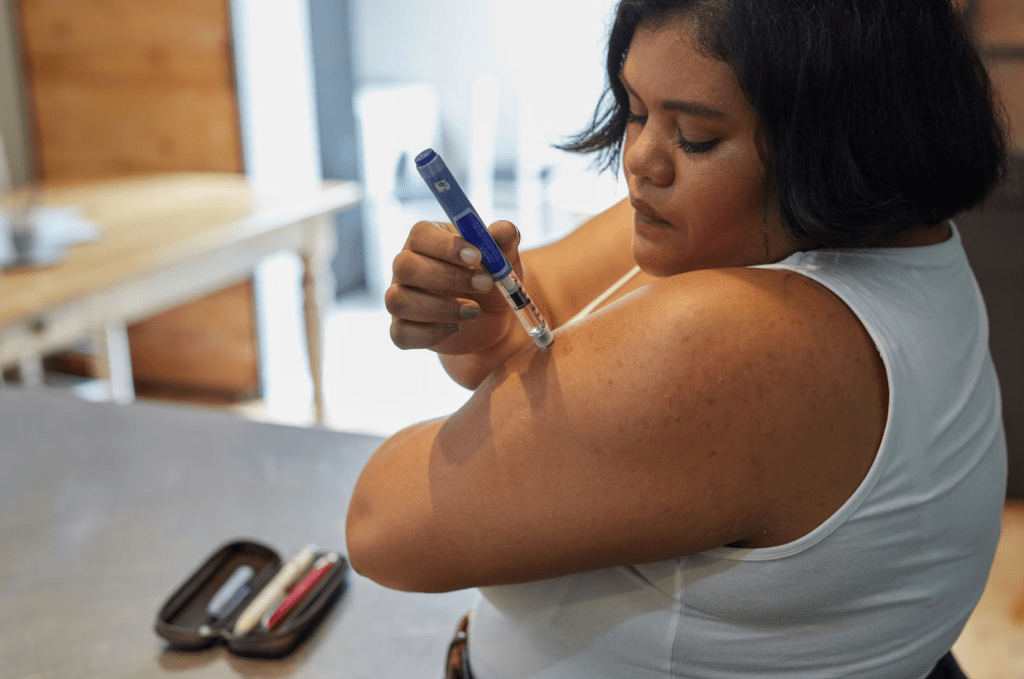
The “other” symptoms sure are pesky – the ones that plague some FA’ers and only “kind of” affect others. Some people are skipped over altogether, at least for now. Progressive conditions constantly change. [At least we have one FDA-approved medicine that helps combat progression – Skyclarys.]
Some of the “other” Friedreich’s Ataxia symptoms* include:
- Cardiomyopathy (thickening or weakening of the heart muscle)
- Scoliosis
- Hearing and vision impairment
- Diabetes
- Low body mass index (BMI)
- Muscle pain or stiffness
- Urinary frequency or urgency
- Osteoporosis (low bone density)
- Pes cavus (high arched feet)
- Sleep apnea
- Depression/anxiety
These come from the FARA (Friedreich’s Ataxia Research Alliance) website. Their list of FA symptoms includes the primary ones I discussed in the beginning of this article, plus all these extras.
*Many of these are a result of oxidative stress in my body cells, which accumulates over time. That’s another side effect of FA. (Source 5)
Other “other” symptoms
You know what’s wild(ly unfair), though?
In addition to many of the common symptoms, I actually struggle with things that AREN’T on either list. I guess there are OTHER “other” FA symptoms?!
Two of the other “other” symptoms I’ve been dealing with lately…
- Muscle spasms (to be fair, some websites mention spasticity when describing FA – just not the “official” site, as of Jan. 2026)
- Inability for body to regulate temperature (could be categorized as poor circulation, but it’s more than that. it goes so far as to interfere with my sleep. go figure?)

I’ll spare you most of the details.* Instead, I’ll share a “FUN” fact about myself that ties into both issues. In this case, FUN is an acronym for freakishly uncool news.
I can’t get in a regular swimming pool. Every muscle in my body tenses up when I’m submerged in cold water, which is not exactly comfortable. But, boy, do I love hot tubs and hot baths! It is heavenly to feel my whole body warmed up simultaneously.
Well…for about 15-30 minutes. Then, it turns to hell. My cheeks get flushed. Then, I suddenly feel like I’m having a heat stroke and I can’t breathe.
Here’s an article about FA and spasticity, and here’s another FA’er talking about similar struggles with the cold.
*If you want to discuss these symptoms more in-depth, or anything else related to FA, email me at lilymirandapie@gmail.com.
Conclusion
Please don’t feel too bad for me. Yes, FA sucks, but my life is great overall, Thankfully, I’m a glass-half-full thinker. So, while my totally involuntary spasms are totally annoying, look at the bright side – at least I can move all my body parts. Which would be shocking to those who presume I’m paralyzed!
I hope you leave today knowing some facts about ataxia. Remember, in short: having ataxia means being an all-around hot mess. Emphasis on hot! 😉 Just kidding.
Next time you see a disabled person, just realize their struggles may go far beyond what you see on the surface! You never really know what people go through until you walk a mile in their shoes. Or roll a mile in their wheels.
If you read this far down, thank you for spending some of your limited free time with me. May God bless you today.

Sweater purchased from kellyandfa.com 🙂



 Retrospective Lily
Leave a comment