
As I type this, it’s my second day taking the only FDA-approved medication for Friedreich’s Ataxia – Skyclarys aka Omaveloxolone.
For those who aren’t familiar with the disease:
Friedreich’s Ataxia causes progressive damage to the spinal cord, peripheral nerves, and the brain, resulting in uncoordinated muscle movement, poor balance, difficulty walking, changes in speech and swallowing, and a shortened lifespan. The condition can also cause heart issues. FA tends to develop in children and teenagers and gradually worsens over time. Although rare, it’s the most common form of hereditary ataxia in the United States, affecting about one in every 50,000 people.

Selfie I took during my first clinical drug trial, 2013
(I could still walk unassisted, but it was getting harder by the day)
It’s surreal to live in a world where my condition is now treatable. Don’t get me wrong; I’m not expecting anything miraculous. But, of course, any improvement or stopping the condition from worsening over time is welcome.
But I call it “surreal” because, having a rare condition with no treatment, you get used to the idea that this is forever. You become so accustomed to hopelessness that you end up desensitized – or depressed. Thankfully, my mental health has always been good. So, I wasn’t sitting around pitying myself (most days, anyway) but I wasn’t expecting things to get better, either.
I feel this incredible mix of emotions.
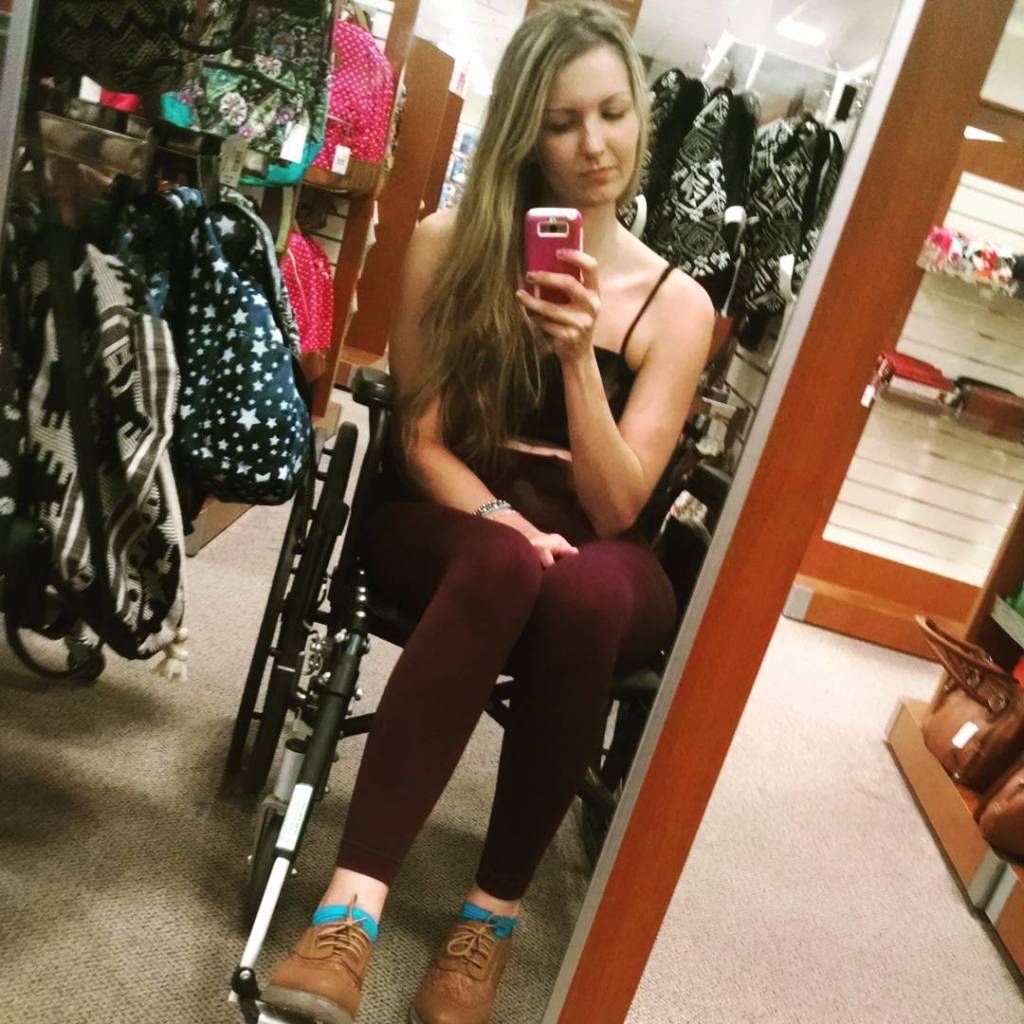
The first picture of myself using a mobility aid posted on social media, 2014
(Walking unassisted was near impossible at this point, but I was stubborn and only used mobility aids in big places like the mall)
It’s awe-inspiring to consider every fundraiser, every scientific conference, and every clinical drug trial leading up to this moment. Unraveling the thread further, I think of every drug trial visit with every participant (how many miles have been travelled by FA patients going to drug trial appointments?!) and all the documentation involved in tracking progress. I think of all the hours of research from committed scientists. I think of all the money raised, all the miles tread on bikes and trikes at rideATAXIA events. I could go on and on; it’s truly overwhelming to meditate on the blood, sweat, tears, research, dollars, persistence, etc. that got us here.
Fun fact: I have participated in two double-blind, placebo-controlled* clinical drug trials. One of the drugs was called EPI-743, and that trial lasted from 2013 to maybe 2015 (can’t quite remember). I took three pills spaced evenly throughout the day, with a glass of whole-fat milk each time to aid in absorption. Then, I participated in a trial for Interferon Gamma from 2016 to 2018, which required me to take shots every day, and the drug had to be kept cold. Between that and the milk, refrigerators were an important component of my past drug trials! I’m thankful that isn’t the case with this new medicine.
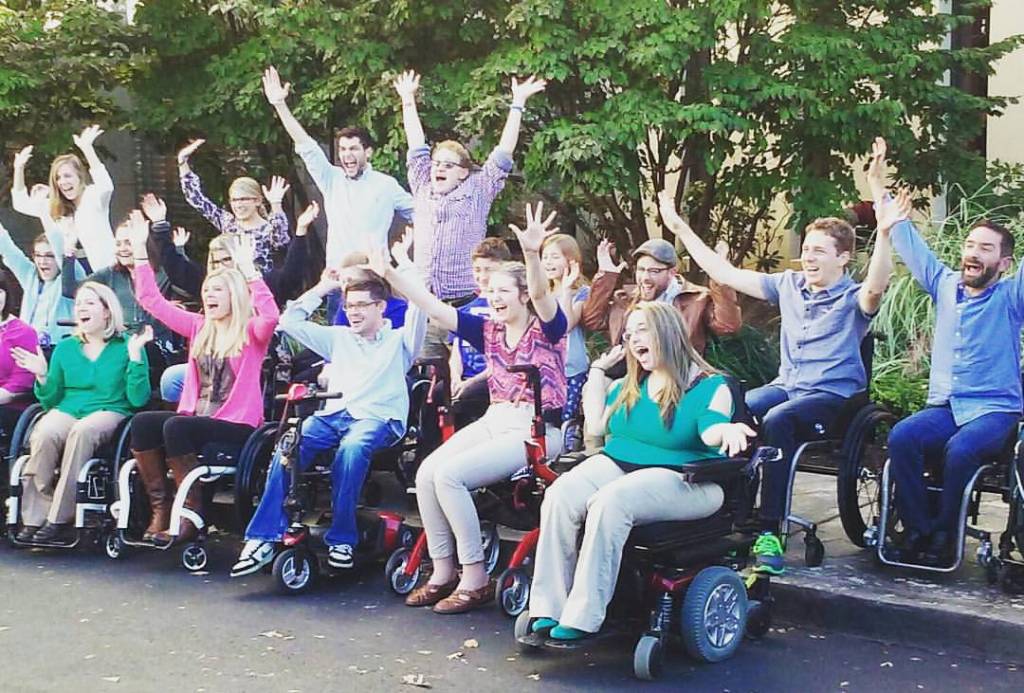
Some of my FA peers at a scientific conference, 2015
(I was using a rollator walker full-time by this point)
I also feel a disorienting blend of happiness, caution, hope, and guilt.
It’s obvious why I’m happy – yet, I’m also cautious to feel too happy, too hopeful. My dad, my designated travel companion to conferences and trials for the last ten years (my mom is my primary caretaker at home) is having a similar reaction – optimistic yet apprehensive. We’ve had the air deflated from our balloon one too many times, and it’s made us jaded. Better to have low expectations so you won’t be disappointed.
Then again, because I follow Jesus, hope is always alive and well. God’s mercies are new every morning. He has a plan.
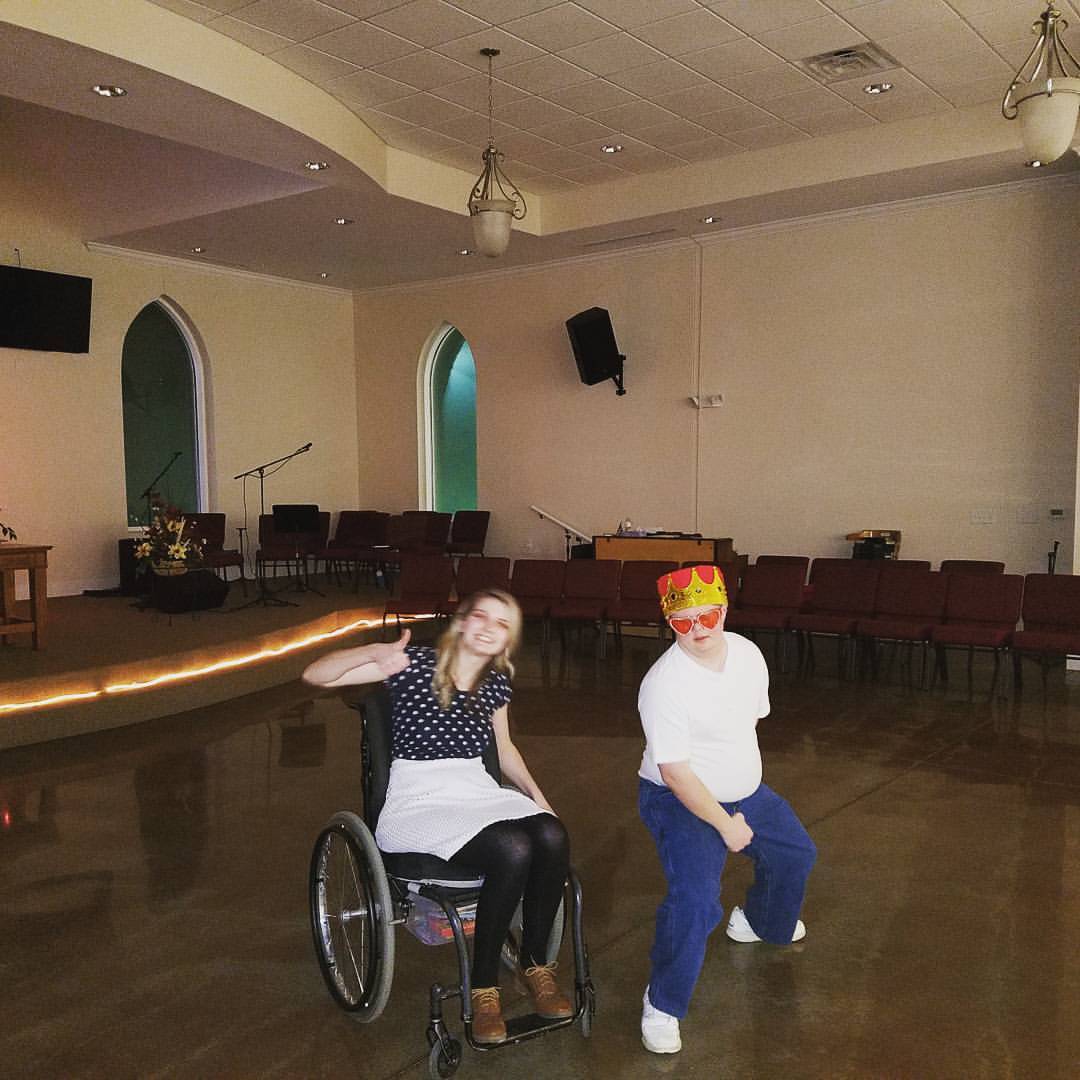
My church buddy Harry & I tearing up the dance floor, 2017
(I was using a manual wheelchair full-time by this point)
Odd as it sounds, I also feel guilty. Many FA patients can’t access it due to where they live or are getting ground up by the machinations of health insurance, a corrupt bureaucracy here in the US. The cost without any financial assistance is $37,000/month. Some have applied for Medicaid assistance and been denied multiple times. It’s evil how people with disabilities and other health issues are treated. It took me months of jumping through hoops to get this, and I’m very lucky to have it.
I feel bad when I consider all the common AND rare diseases that have no treatment and may never get one. How can I be joyful that my suffering might ease, knowing so many others suffer with no reprieve? Would my faith stay strong forever if no treatment for my condition were developed for my entire life?
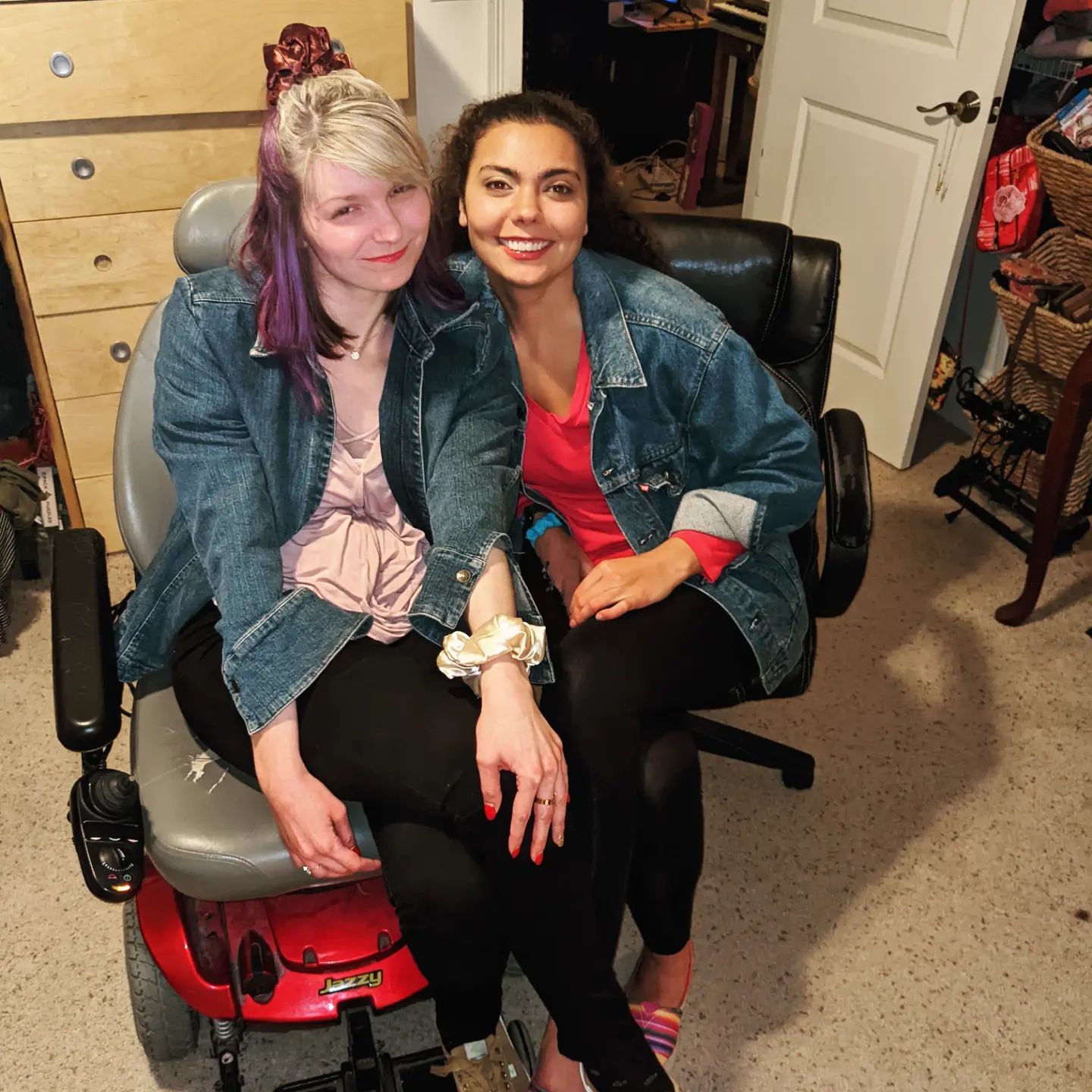
My best friend Claire & I getting ready for a night out, 2022
(A couple years ago, I started using an electric wheelchair at home to get around on carpet more easily)
In light of receiving the medicine, my mom and I keep singing “He’s an On-Time God.” One of the lines goes – He may not come when you want Him, but He’ll be there right on time. The idea is that God’s timing is intentional, and while they doesn’t usually fit into our schedule, things happen at the right time for a reason.
I don’t believe literally everything happens for a reason. We have free will to sin and hurt people. But I do believe in God’s sovereignty, timing, and plan.
So, we’ll see what happens. Please be in prayer for me, all FA patients taking this medicine, and all FA patients who have not yet received it.
(featured image: a pic featuring all FA patients at a scientific conference in 2019 – I’m in a manual wheelchair)






 Retrospective Lily
Leave a reply to Lily Pierce Cancel reply