
That is the question…
When I was in 7th grade, my English class got assigned to write an essay about our favorite TV show. I, being a very mature 12-year-old, chose Spongebob Squarepants. In my paper, I described all the pertinent details about the show and its regular recurring characters.
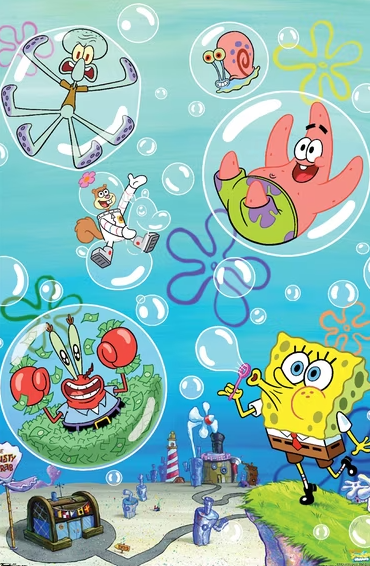
When the teacher returned my essay with her revisions, she had written this statement at the top of the page: “Uses is/are/to be too much. Rewrite with action verbs only.”
It wasn’t easy, but I managed to complete the task.
Before: “The show Spongebob Squarepants is about a happy, yellow sponge who lives in a pineapple under the sea. His pet snail is named Gary. The show is set in a town called Bikini Bottom. His best friends are Patrick, Squidward, and Sandy. He is a fry cook at The Krusty Krab.”
After: “The show Spongebob Squarepants centers around a happy, yellow sponge who lives in a pineapple under the sea with his pet snail, Gary. He and his three best friends – Patrick, Squidward, and Sandy – reside in the town of Bikini Bottom. He earns a living frying krabby patties at a local restaurant called The Krusty Krab.”
At a young age, that English teacher taught me the importance of a broad vocabulary. Excessive use of “to be” makes writing feel boring, tedious, and redundant. Action verbs spice things up. Action verbs paint the world in vivid colors.
~
Another piece of writing advice I take into consideration comes from the prolific Stephen King. In his memoir, he wrote, “the road to hell is paved with adverbs.”
Adverbs can be effective if used deliberately and sparingly. But they often make sentences read as clunky or superfluous.
In many cases, the need for an adverb disappears after rephrasing the statement with a better verb. “He walked slowly towards the door” becomes “He trudged towards the door.” “I thought about it obsessively” becomes “I obsessed over it.”
As a general rule, books with fewer adverbs are easier and faster to read.
However, in my opinion, we should apply some nuance to King’s sentiment. Let’s reassess the second example I gave. It might have a strong impact if I wrote, “I thought about it constantly, relentlessly, obsessively. Scenes from that day flashed across my mind like a never-ending horror movie.”
The adverbs work in that context because they are knit together to produce a certain effect. Adverb stacking elicits a feeling of overwhelm that correlates with the character’s overwhelm. The clunky sentence is followed by a short sentence with a strong action verb to provide a relieving contrast.
~
I stay mindful of how much “to be” and adverbs show up in my writing. In this particular post and in my memoir (still under construction), I use them both, though only a moderate amount.
As a writer, I want to strike a balance between sounding smart and sounding down-to-earth – sounding too sharp or sounding too wordy – looking to others for inspiration but trusting my intuition.
What is the best piece of writing advice you have heard? I’d love to know, and I’d love to grow.





Leave a Reply